The Power Of Keyword Intent: How To Boost Your Engagement and Conversion Rate
If you’re in the business of selling products or services online, then you know that conversion rates are important. Your conversion rate is a measure of how many people who come to your website take the desired action – whether that’s making a purchase, signing up for a newsletter, or downloading a piece of content.
There are a number of factors that can affect your conversion rate, but one of the most important is keyword intent. Keyword intent refers to the purpose or goal of the person who is searching for a particular term. If you can align your keywords with the intent of your target audience, you’re more likely to see a boost in your conversion rate.
In this article, we’ll explain everything you need to know about keyword intent and how it can help you boost your conversion rate.
Why You Should Care About Keyword Intent When Doing Your SEO
Understanding keyword intent is important for successful search engine optimization (SEO). It provides insight into what the user is likely to do after typing a particular phrase, enabling marketers and web developers to better match content to potential customers. Although we can't always be certain of the user's motive behind an inquiry, with the right research and analysis, we can make well-informed guesses.
Keyword intent is essential for effective keyword research. It ensures that your content and landing pages meet the requirements of your users, offering a better user experience. For this reason, it should be at the forefront of your keyword analysis process when diagnosing conversion issues stemming from search referrals. Moreover, keyword intent spells out what your business does and what products of services you offer.
Search intent is a crucial element to consider when developing your content strategy and building your digital footprint overtime. To understand the needs of your target audience, you need to create relevant content that directly addresses their queries. As a result, your website has more opportunities for ranking higher in search results, as this shows search engines that you have valuable and pertinent content for users.
What are the 4 types of search intent?
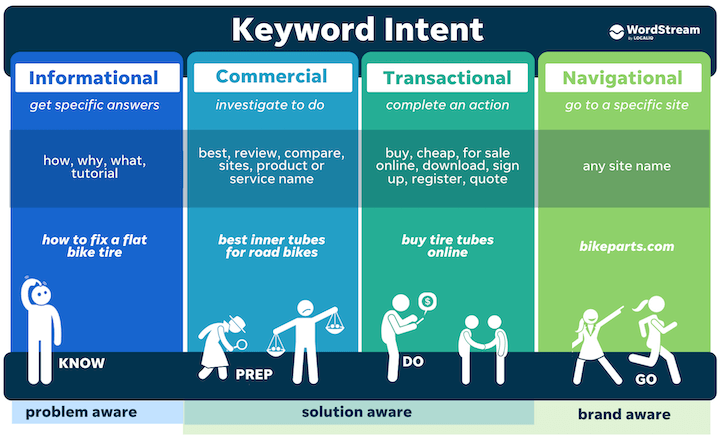
Commercial Search Intent
This type of query is identified by the presence of “buy now” intent. It indicates that the searcher is ready to take action, whether it be for buying something, signing up for a service, or using a coupon code. Examples of modifiers typically associated with this category include "buy," "coupon," "deals," and "free shipping." Given their readiness to purchase, these types of queries can be an extremely effective tool in driving conversions.
Who uses this keyword intent type?
Almost all businesses use commercial intent keywords. Usually, the application comes to picking industry-related and non-branded search queries that accurately describe a business's services or products. For instance, "SEO agency manila" is an ideal industry keyword that's commonly used by businesses in the same line of work. When this phrase is searched online, users will typically come across a list of similar firms aiming to rank for the same term.

Transactional Search Intent
Transactional intent is a combination of informational and commercial intent. In other words, a user may either want to purchase something or read more about the concept. This means that with proper content setup, you can potentially convert users further down the funnel. Examples of such queries include terms like "reviews", "vs", "best" and "top 10".
Who uses this keyword intent type?
Always all businesses also use this search intent. However, some websites that are product-heavy use this search intent more often. These can be e-commerce shopping sites, booking landing pages, app downloads, or anything that goes straight to a payment or specified conversion landing page.

Navigational Search Intent
Navigational keywords combining a business brand with its products or services are important for businesses to target this type of audience. For example, as hotel may have navigational keywords such as "Hotel XYZ locations", "Hotel XYZ promos", "Hotel XYZ contact" and "Hotel XYZ accommodation" can lead customers to that specific brand. It is essential to include these types of keywords to reach out and attract this section of your user base.
Who uses this keyword intent type?
Businesses with worldwide, nationwide, or regional office locations are among the examples of businesses that use navigational keywords. Large corporations with thousands of web pages may also require the use of navigational keywords to escort users to the right page.

Informational Search Intent
Informational intent indicates that the searcher is seeking additional information on a particular subject. This type of query would be ideal for creating "gated" content or collecting emails. Queries focusing on an informational intent commonly contain modifiers like: how to, why, best way to, history of and what it means. These are all good indicators that the user is not looking to make a purchase imminently but just wants more knowledge on the topic.
Who uses this keyword intent type?
Informational keywords are commonly used by experts, professionals, bloggers and reviewers. Usually, these keywords are what you'll find from linked to websites like Wikipedia, Web MD, Investopedia, HuffPost and many others. They either help users find definitions, biographies, reviews, instructions, and directions.

The Bottom Line
In conclusion, keyword intent is the purpose behind a searcher's query. It is important to optimize for search intent in order to rank highly in the search engine results pages. To do this, you must match metadata and content type to the intent, examine the competition, and format content for relevant SERP features. It is also important to understand the search intent before optimizing content. When discovering new terms, use specific modifiers in your keyword research.
In case you are not sure how you can research and implement the four types of keyword intent in your website, it is always helpful to seek help from those who specialize in the field.
Serprise Digital is an SEO agency that has helped local and e-commerce businesses in Australia and the United States. From local plumbers, anti-aging shops, law offices, and others, you can be confident that researching keyword sets for your website won't take much time.

Comments
Post a Comment